
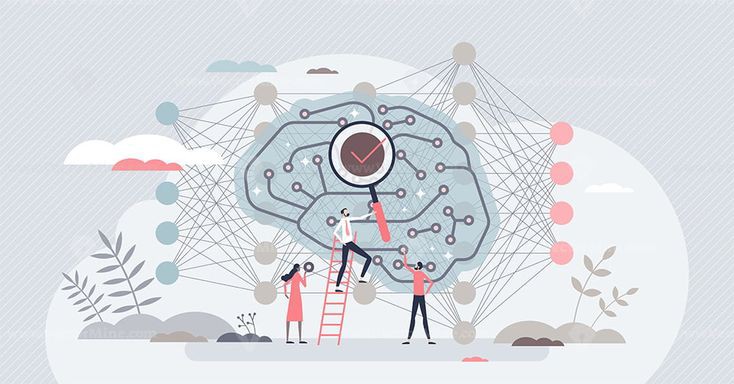
Machine learning (ML) is a part of artificial intelligence in which systems learn patterns from data rather than following rules written by a developer. The more good data a model sees, the better its predictions become.
Machine learning and deep learning
Deep learning is a specialised kind of ML that uses multi-layer neural networks. It excels at complex tasks such as image and speech recognition and needs less manual feature engineering, but usually requires more data and computing power.
Types of learning
- Supervised learning learns from labelled examples.
- Unsupervised learning finds structure in data without labels.
- Reinforcement learning learns by trial and reward.
The ML pipeline
A typical project follows four stages: collecting and preparing data, choosing and training a model, evaluating and validating it, and finally deploying and monitoring it in production.
Applications
In healthcare, ML supports predictive analytics and personalised medicine. In finance it detects fraud and guides investment strategies. E-commerce uses it for recommendations, and autonomous driving depends on it.
Challenges
Data privacy, bias and fairness, and the need to explain model decisions are the main concerns that teams must address.
The future
Advances in quantum computing, natural language processing and new algorithms will widen what ML can do across industries.



Discussion
0 commentsNo comments yetBe the first to share your thoughts.